
How Solar Energy Works: A Beginner’s Guide
How Solar Energy Works: A Beginner’s Guide
Introduction
Hey there! Have you ever wondered how solar energy works and if it’s a good fit for you? With the rising cost of electricity and Nigeria’s frequent power outages, many people are turning to solar power for a reliable and cost-effective solution. But how does it actually work? Let’s break it down in a fun and easy-to-understand way!
What is Solar Energy?
Think of solar energy as a way to catch the sun’s power and turn it into electricity—just like how plants use sunlight to grow, but instead of food, we get electricity!
The Key Players in a Solar Energy System
To make this magic happen, we need:
1. Solar Panels: These are like sun-catchers that soak up sunlight and turn it into electricity.
2. Inverter: Think of this as a translator—it changes the sun’s energy (DC electricity) into the type your home can use (AC electricity).
3. Battery Storage (Optional): This works like a power bank, storing extra energy for when the sun goes down.
4. Charge Controller: Keeps everything running smoothly by making sure the battery doesn’t overcharge.
5. Electric Grid (Hybrid Systems): Some setups let you stay connected to the national grid in case you need backup power.
How Does Solar Energy Work?
It’s simple! Imagine your solar panels as a farm:
1. Sunlight Absorption: The panels “harvest” the sun’s rays.
2. Electricity Generation: The sunlight gets converted into raw electricity (DC power).
3. Conversion to Usable Power: The inverter “cooks” the raw electricity into a form your home appliances can use (AC power).
4. Power Distribution: The electricity is used immediately, stored in batteries, or sent back to the grid for later use.
Solar Energy Flow: Sunlight → Solar Panel → Inverter → Battery/Grid → Home Power
Types of Solar Systems: Which One is Best for You?
Let’s compare the three main types of solar systems:
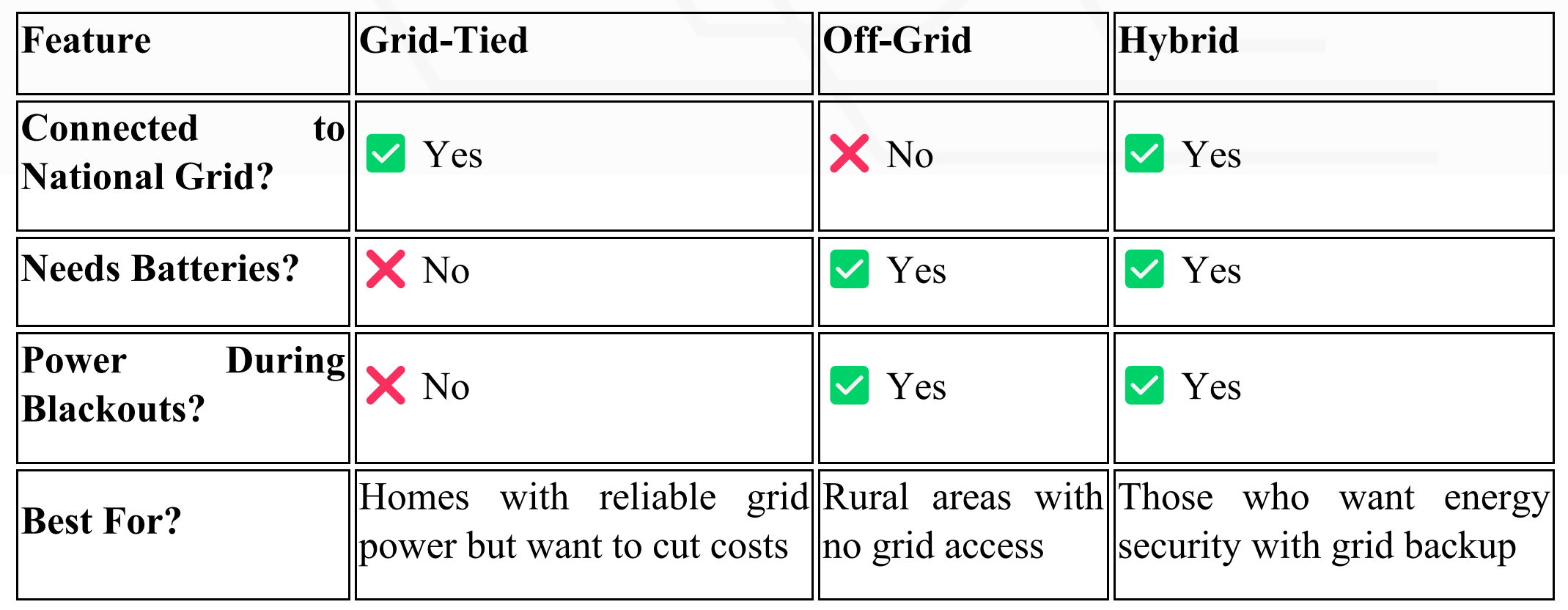
Cost-Saving Breakdown
Wondering if solar is worth the investment? Here’s how it saves you money over time:
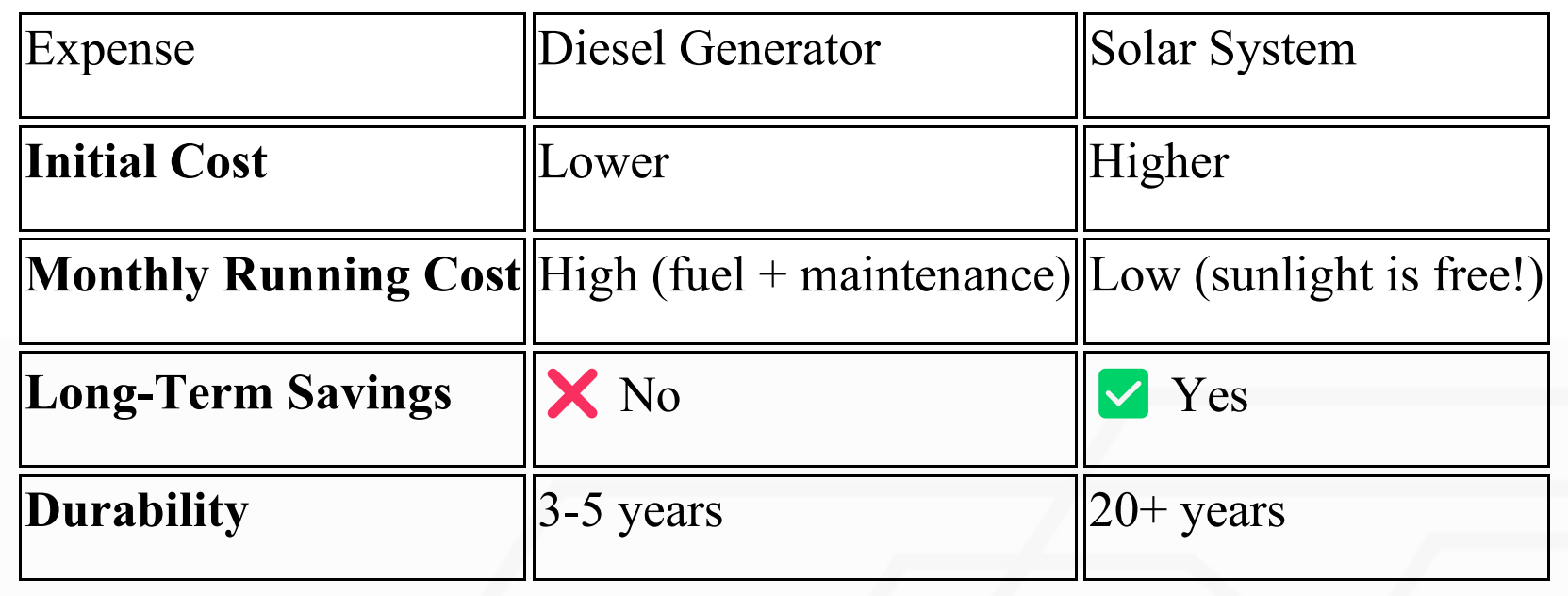
Bottom Line:
While a solar system requires an upfront investment, it saves you millions in electricity and fuel costs in the long run!
If you are in Nigeria, here’s why you should consider Switching to Solar
- Say Goodbye to Blackouts – No more “Up NEPA!” celebrations.
- No More Fuel Scarcity Worries – Unlike generators, the sun never runs out.
- Lower Electricity Bills – Spend less on PHCN and diesel.
- Eco-Friendly – No smoke, no noise, just clean energy.
Common Myths About Solar Energy
- “Solar doesn’t work on cloudy days.”
Truth: It still works, just at a lower efficiency. - “Solar is too expensive.”
Truth: The upfront cost is high, but the savings make up for it over time. - “Solar panels need too much maintenance.”
Truth: They only need occasional cleaning and can last over 20 years!
Solar energy is not just for the rich—it’s an investment that pays for itself! Whether you want to save money, reduce your reliance on PHCN, or help the environment, solar power is a smart choice.
Get a Free Solar Assessment Today!
Click here to explore your options and get expert advice on making the switch to solar.
Call/WhatsApp: +234 813 433 9790
Email: info@daasa.systems
DAASA Integrated Systems Limited– Shaping the Future with Smart Solutions!